How These Articles Are Made
Every article here begins with a person reading Scripture. Someone sits with the text, meditates on it, and works through the difficult concepts other believers may want explained. That is where a PressingWords article comes from, and no tool substitutes for it–the regenerate Christian who has eyes to see by virtue of an indwelling Holy Spirit.
Every Scripture quotation is verified word-for-word against the published text before publication rather than trusted to anyone’s memory (see Old Testament scribes).
From that starting point, we do use AI tooling to help move the work along. As an analogy, consider how a car is made. Humans conceive it and design it. A person decides the tooling for manufacturing and sets the process. Machines then execute much of the production — faster, more consistently, and with fewer errors than human hands alone would manage. The design is no less human for it. That is the arrangement here. AI assists with drafting support, research, error-checking, compliance against our editorial and theological standards, and the review passes every article must survive.
What this replaces is a periodical production process that is ordinarily labor-heavy and specialist-heavy.
Because PressingWords is a not-for-profit entity, we charge nothing and earn nothing. Without this tooling, the work you are reading would not exist — not because the conviction behind it would be absent, but because the hours and the specialist labor a publication of this kind normally requires are beyond what a limited funding effort can carry. The tooling is what makes the standards affordable, and it absorbs the repetitive verification where human fatigue is most likely to let an error through.
What it does not replace is the Berean. The choosing of the passage, the weighing of the argument, the judgment about where Scripture speaks and where it leaves mystery, and the decision that a piece is fit to publish — these remain human, Spirit-led, and answerable. Where the tool and the editor disagree, the editor decides. Nothing publishes unread.
You may also see this disclosed by other means. Some AI systems now embed a statistical watermark in the text they generate, detectable by the provider. Where our tooling has shaped the prose, that mark may be present. It says nothing this page has not already said, and we would rather name it plainly than have a reader discover it and wonder what else went unsaid.
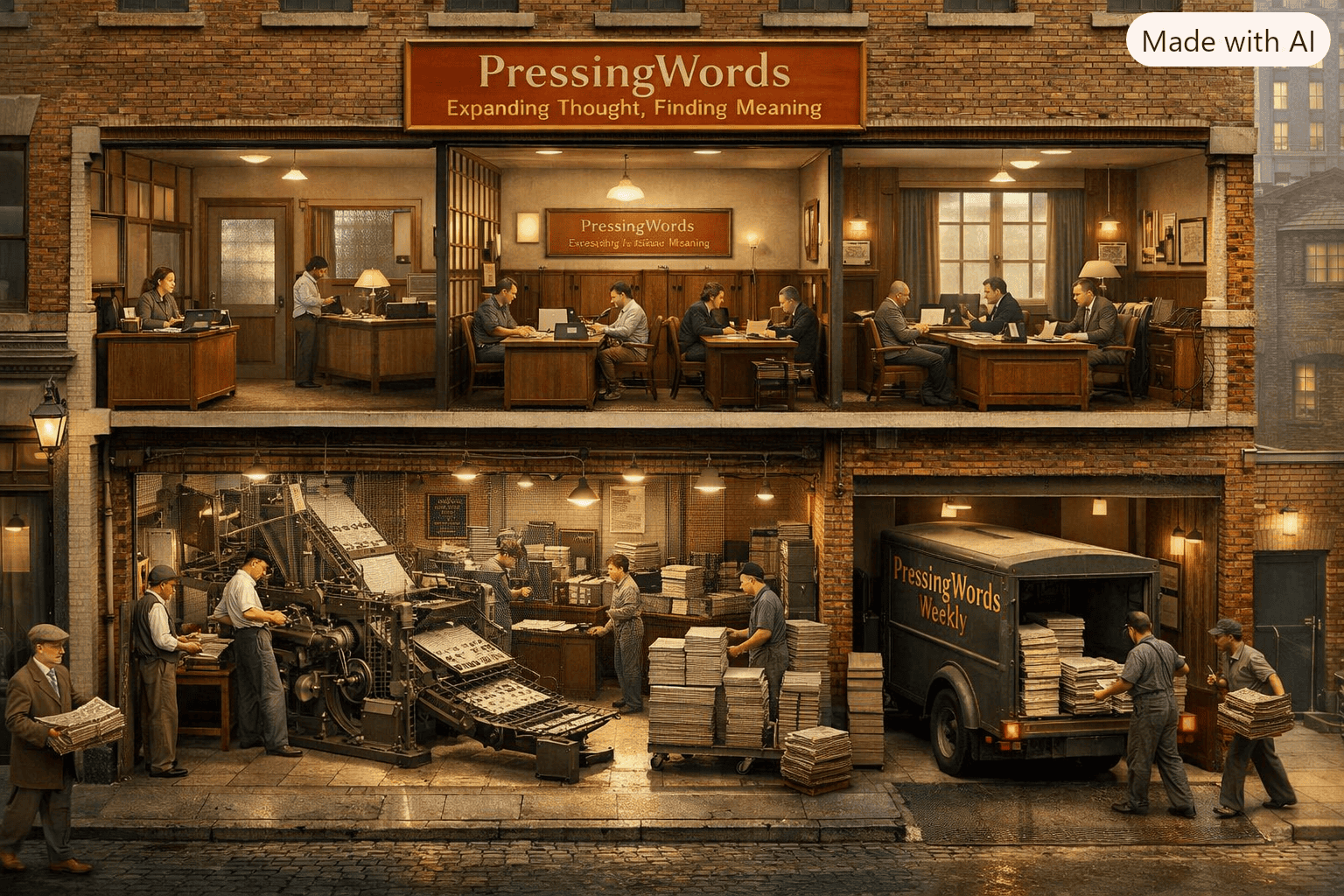
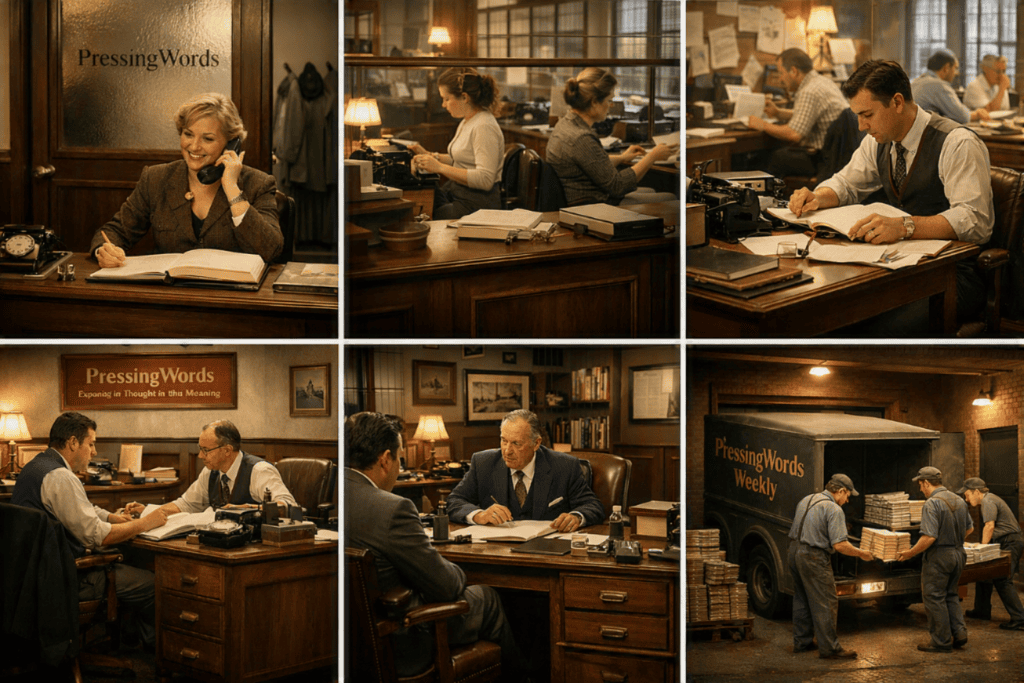
The images are made the same way. Every hero image here is conceived and directed by the editorial staff — the setting, the period, the composition, and what the scene is meant to press upon the reader are decided before any tool is opened — then generated with AI tooling and revised until it serves the article. The design is human; the execution is a mix. None of these images is a photograph. None depicts an exact real place, a real person, or a documented event, and none should be received as evidence of one.
Some tools stamp their output with a visible badge. We remove it — not to hide its origin, but because it frequently sits over an element of the composition placed there deliberately, and because a mark that appears on some images and not others is worse than no mark at all. The removal is itself done with the same tooling. Since the badge comes off every image, the disclosure belongs where it covers every image, which is here.
Which is finally the point. PressingWords asks its readers to be Bereans — to receive eagerly and examine daily whether these things are so (Acts 17:11). That posture does not depend on what shaped the sentences. It depends on whether the text stands when you open your Bible and check. We would rather you tested this publication and found it sound than trusted it and never looked.