Why did God begin with furniture?
Before giving Israel a single law of conduct, God designed the conditions under which His holiness could dwell among an unholy people—and the cost of keeping it there.
The Cost of Sin and the Encouragement of the Continuous Presence of God
“And let them make me a sanctuary, that I may dwell in their midst.”
—Exodus 25:8, (ESV)
The covenant has just been ratified in blood. Moses sprinkled it on the altar, then on the people, and they declared, “All that the LORD has spoken we will do, and we will be obedient” (Exodus 24:7). The elders of Israel ate and drank in the presence of God on Sinai without being consumed. Now Moses ascends alone into the cloud for forty days and forty nights. And when God speaks, He does not begin with conduct, dietary law, or civil code. He begins with furniture. He begins with architecture. He begins with the conditions under which an infinitely holy presence can dwell in proximity to a people who are not holy and who, left to themselves, will prove it almost immediately.
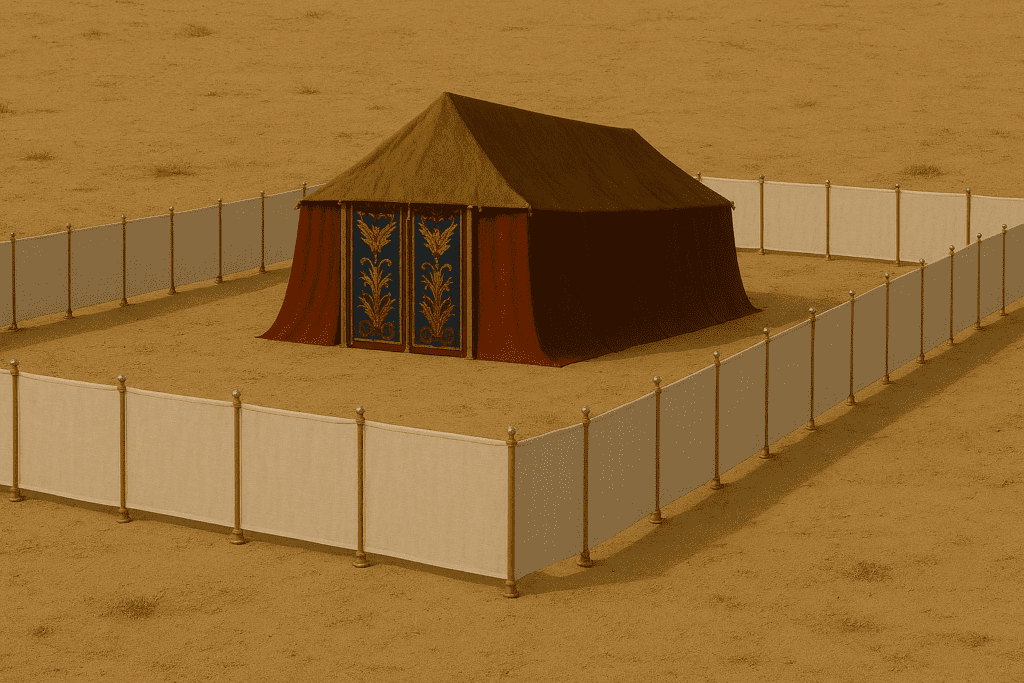
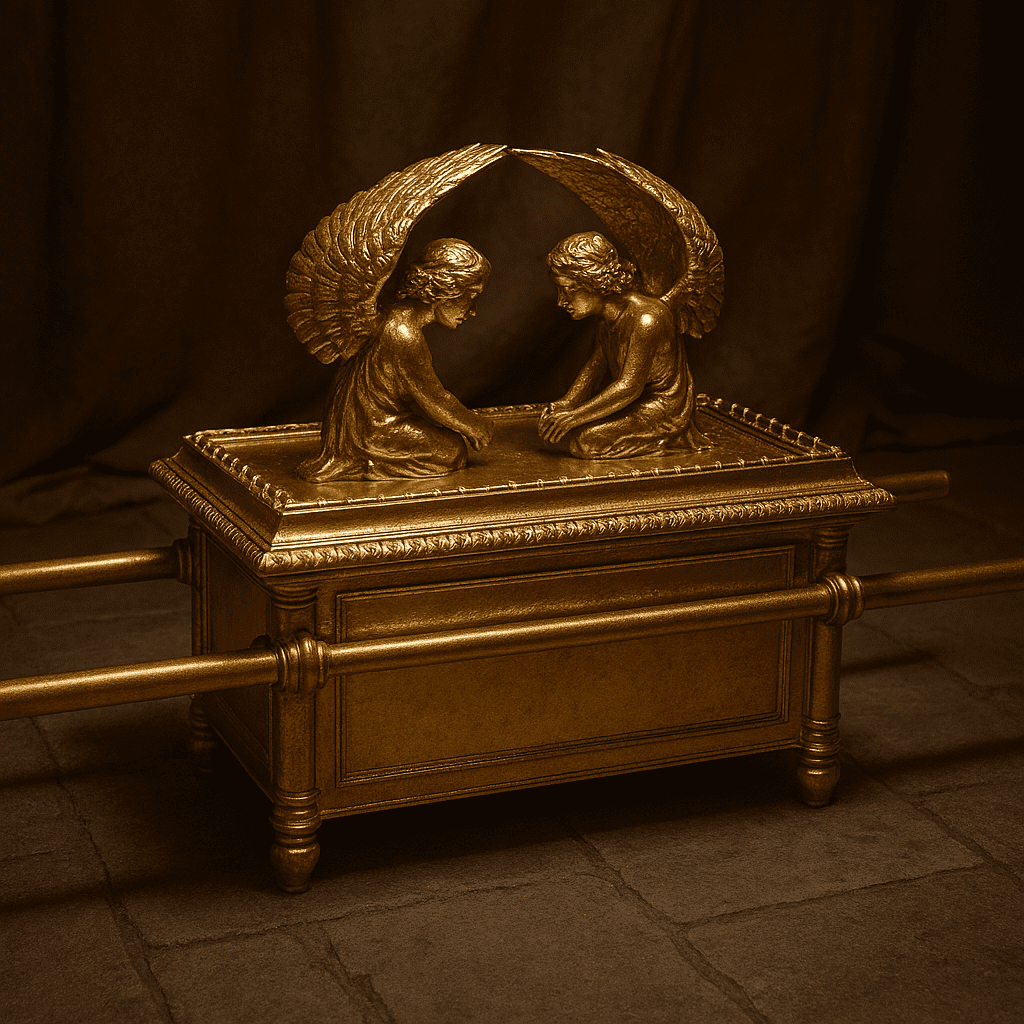
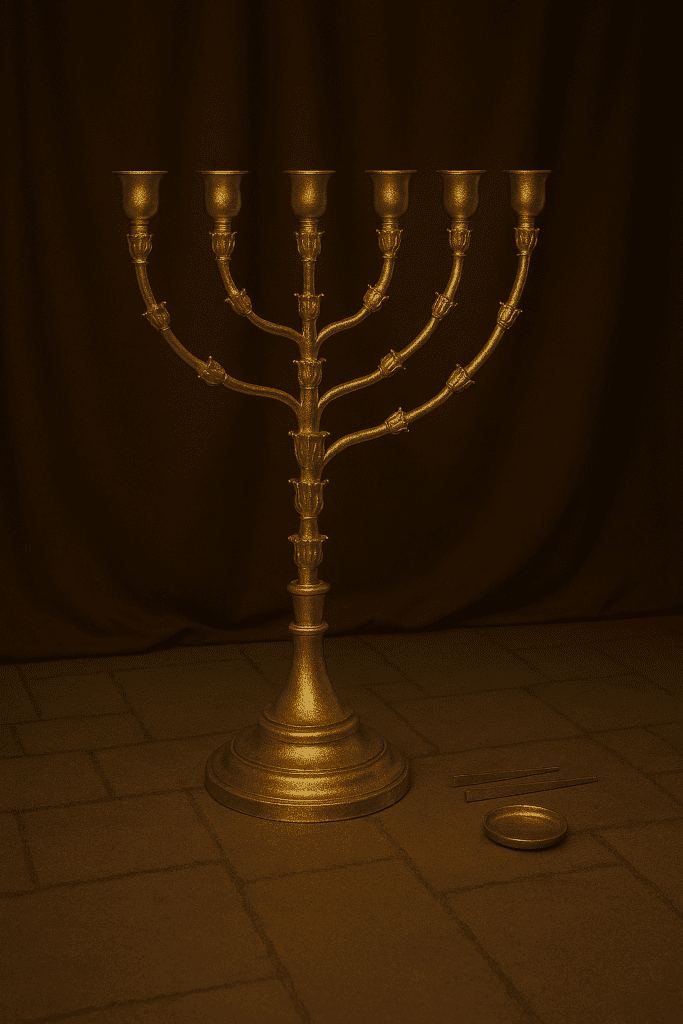
That single verse—Exodus 25:8—is the thesis statement for everything that follows across the next seventeen chapters and into the book of Leviticus. The ark, the mercy seat, the lampstand, the curtains of blue and purple and scarlet, the altar of bronze, the priestly garments, the oil, the incense, the consecration rites—all of it serves one architectural purpose: engineering the conditions under which holiness and sinfulness can coexist in close quarters. But this is not merely an engineering project. It is a formational one. What unfolds from Exodus 25 through Leviticus 5 is the beginning of a generations-long pedagogy designed to take a people fresh from four hundred years of pagan immersion and form them—through costly repetition and excruciating detail—into a people who know the weight of sin and the price of atonement not as ideas they affirm but as realities inscribed in their hands, their flocks, and their memory.
Why Not Simply Overpower the Problem?
A reasonable mind, reading Exodus 25–40, might ask the obvious question: why all this? God is omnipotent. He parted the Red Sea, rained bread from heaven, spoke the cosmos into existence. Could He not simply erect a pillar of fire around Himself, sterilize the ground beneath His feet, and dwell among Israel by raw sovereign power without all this elaborate infrastructure of tents and altars and bleeding animals?
He absolutely could have. Nothing in the system constrains Him. The tabernacle is goat hair and acacia wood and bronze—materials that could not contain the God who fills the heavens and the earth (Jeremiah 23:24). So the question is not what God needs. It is what God intends. And what He intends is not mere cohabitation but covenant relationship—and covenant, by its nature, is bilateral.
A pillar of fire solves the proximity problem. God is near, and the people are protected from being consumed. But it teaches the people nothing. It does not reveal the weight of their sin. It does not create a people who participate in maintaining the relationship. God does everything; the people do nothing and learn nothing. And a people who learn nothing about holiness will never become holy.
God is not merely trying to be near Israel. He is trying to make Israel into the kind of people who can sustain His nearness. “You shall be holy, for I the LORD your God am holy” (Leviticus 19:2). That is not a wish. It is a formational objective. A pillar of fire would keep them alive. The tabernacle system makes them different.
There is also a longer game at work. If God simply overpowers the problem of sin with sovereign force, there is no lamb. No blood. No substitution. No hand laid on the head of an innocent animal. And if there is none of that, then when the Lamb of God appears centuries later, Israel has no framework—no interpretive grammar—for understanding what is happening on that cross. The sacrificial system is building the theological vocabulary that will make Good Friday intelligible. God is choosing formation over force because the system He is building is not an end in itself. It is a thousand-year curriculum pointing toward a single afternoon in Jerusalem.
The Architecture of Formation
The problem is stated with devastating simplicity. God is holy. The people are not. Proximity to this God is not a metaphor—it is a spatial, lethal reality. When Nadab and Abihu offer unauthorized fire in Leviticus 10, they die instantly, and God’s explanation is chilling: “Among those who are near me I will be sanctified” (Leviticus 10:3).
Yet God initiates the nearness. The tabernacle is not Israel’s idea. God designs and specifies every detail. The Hebrew word for “sanctuary”—miqdash (מִקְדָּשׁ)—is built from the root meaning “to be holy, to set apart.” The dwelling itself must participate in the character of the One who inhabits it. Materials are set apart. Priests are set apart. Rituals maintain the set-apart-ness of a space that, without constant maintenance, will become polluted by the sins of the people God has come to dwell among.
And notice who does the maintaining. “Let them make me a sanctuary” (Exodus 25:8). The people contribute the materials, perform the construction, bring the offerings, lay hands on the animals, bear the cost. Participation is formation. A people who merely watch God solve the holiness problem will never understand holiness themselves. A people who bear the cost of maintaining sacred space carry that knowledge into every generation.
The voluntary offerings of Leviticus 1–3 establish the language of approach: the burnt offering for complete consecration, the grain offering for thanksgiving, the peace offering for fellowship—the only offering where the worshiper eats a portion, sharing a meal in the presence of God. These are the offerings of love and gratitude. They are how a people draw near. But what happens when they sin?
The Breach Protocol
Leviticus 4 opens with a shift that signals a fundamental change in purpose. The voluntary offerings begin with invitation. The sin offering begins with anticipation: “If anyone sins unintentionally…” (Leviticus 4:2). The conditional carries the force of certainty—when, not if. God does not wait to see whether the people will fail. He knows they will. And the remedy is already designed, already woven into the operating system of the sacred space before the first transgression occurs. Grace is not an afterthought in this system. Grace is load-bearing.
The sin offering—chattat (חַטָּאת), built on the same root as the word for sin itself—functions not merely as payment but as purification. The blood is applied to specific surfaces within the tabernacle: the horns of the altar, the base of the altar, and in the most severe cases, sprinkled before the veil separating the Holy Place from the Most Holy Place (Leviticus 4:6–7, 17–18, 25, 30). This is decontamination language. Sin produces moral pollution that adheres to the sacred furniture, accumulating like toxic residue on the surfaces that mediate God’s presence. If left unaddressed, the sanctuary becomes progressively unclean—and an unclean sanctuary is one God will eventually vacate, as Ezekiel witnessed when the glory departed the temple in stages (Ezekiel 10:18–19; 11:22–23).
The offering required scales according to the covenantal weight of the offender: a young bull for the anointed priest (Leviticus 4:3), a bull for the congregation (4:14), a male goat for a leader (4:23), a female goat or lamb for a common person (4:28, 32). And when even that exceeds the worshiper’s means, Leviticus 5 opens the door further—two turtledoves (5:7), and if even those are beyond reach, fine flour (5:11). The priest’s sin penetrates deeper into the sacred architecture, and the remedy is proportionally severe. But no Israelite is priced out of forgiveness. The system mirrors the character of the God who designed it: exacting in holiness, relentless in mercy.
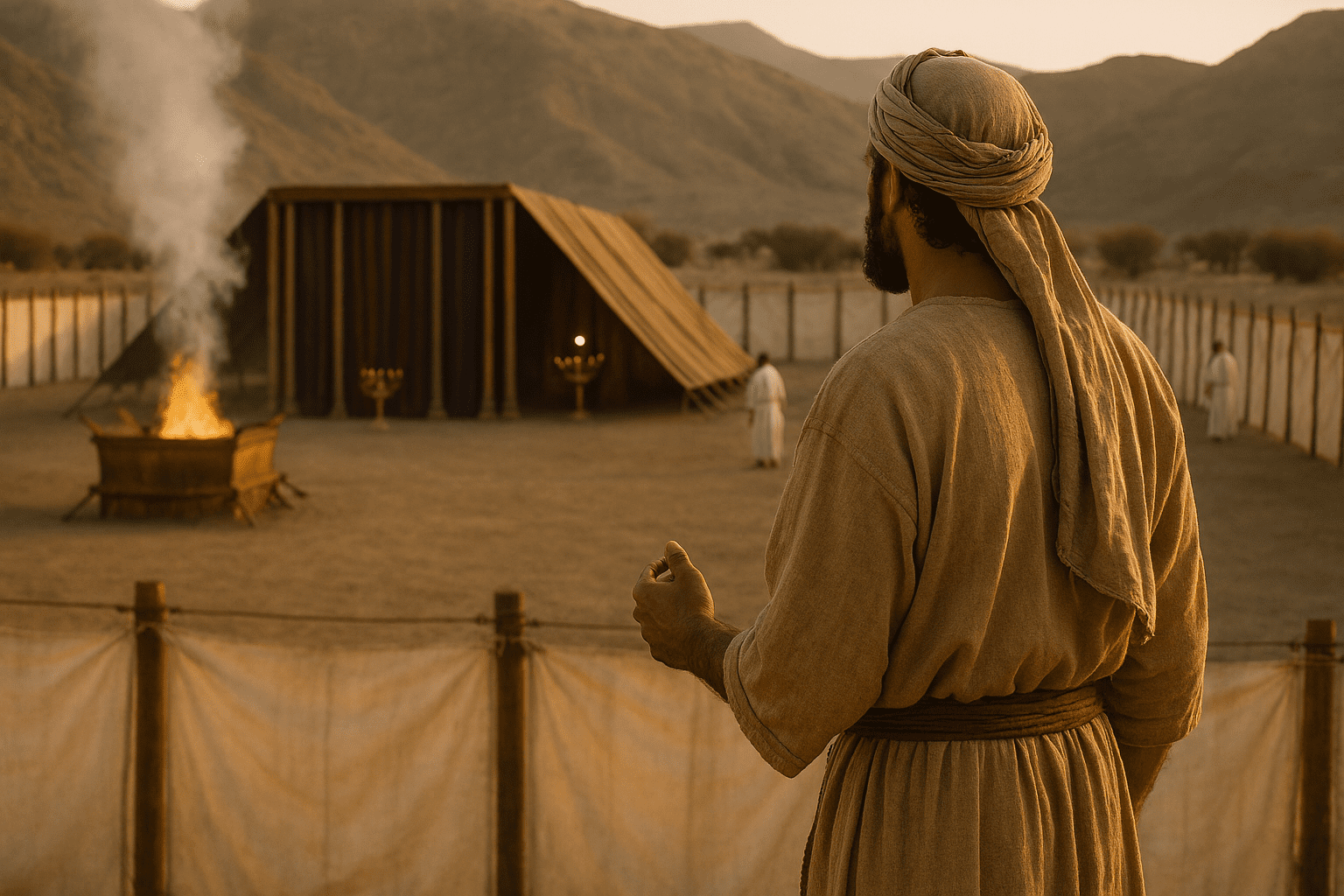
Consider what the sin offering required of a common Israelite. You bring a female goat without blemish—not surplus but household capital in a subsistence economy. You lay your hand on its head—the act of identification—semikah (סְמִיכָה)—transferring your sin to this animal that has done nothing wrong. Then you slaughter it yourself. Not the priest—you. Your hand holds the knife. The priest takes the blood and applies it to the altar. And at the end of this bloody, costly process, the priest pronounces the verdict: “and he shall be forgiven”—venislach lo (וְנִסְלַח לוֹ, Leviticus 4:31). The Hebrew carries the force of accomplished fact. The forgiveness is as certain as the sacrifice.
Every element drives a single reality into the worshiper’s consciousness: sin costs life, and the life that pays need not be your own. This is substitutionary atonement in embryonic form. And the liturgy, repeated across lifetimes and generations, was producing a people who knew—not theoretically but in their muscles and their memories—what sin weighs and what forgiveness costs. God was not running a semester course. He was building a national consciousness, generation after generation, for over a millennium.
The Shadow and the Substance
Yet the system confesses its own limitations in the very act of functioning. The sin offering must be repeated. Every transgression requires another animal. Every year on the Day of Atonement, the high priest enters the Most Holy Place to cleanse the sanctuary of twelve months of accumulated pollution (Leviticus 16). The repetition never ends. Each sacrifice addresses its occasion, but none solves the underlying problem permanently. This is not a design flaw—it is a design feature. The repetition sustained the formational purpose while simultaneously pointing beyond itself.
The author of Hebrews makes this explicit: “For since the law has but a shadow of the good things to come instead of the true form of these realities, it can never, by the same sacrifices that are continually offered every year, make perfect those who draw near” (Hebrews 10:1). And then the staggering conclusion: “For it is impossible for the blood of bulls and goats to take away sins” (Hebrews 10:4). Not insufficient. Not incomplete. Impossible. The entire Levitical apparatus could not accomplish the thing it pointed toward. The system was never the solution. It was the preparation—God forming a people who, after a millennium of embodied education, would recognize the real thing when it arrived.
Every major element finds its fulfillment in Christ by explicit New Testament declaration. The tabernacle—God dwelling among His people—is fulfilled in the incarnation. John’s language is surgically precise: “The Word became flesh and dwelt among us” (John 1:14). The Greek for “dwelt,” meaning “tabernacled”—eskēnōsen (ἐσκήνωσεν)—declares that the God who instructed Moses to build a tent has taken up residence in human flesh. The priesthood is fulfilled in “a great high priest who has passed through the heavens” (Hebrews 4:14), who holds His office permanently and needs no sacrifice for His own sins (Hebrews 7:24, 27). The sacrifice is fulfilled in “a single sacrifice for sins” (Hebrews 10:12)—every element converging: the identification of the innocent with the guilty (Isaiah 53:6), the blood of a lamb “without blemish or spot” (1 Peter 1:19), the purification not of a tent made with hands but of heaven itself (Hebrews 9:12). And the veil—that heavy curtain behind which only the high priest could pass, and only once a year—tore from top to bottom at the moment of Christ’s death (Matthew 27:51). Not from bottom to top. From top to bottom—God’s hand, opening the way.
The Priest Who Sat Down
Perhaps the most striking image in Hebrews is not about blood or altars or curtains. It is about furniture—or rather, its absence. There were no chairs in the tabernacle. The Levitical priests stood because their work was never finished. The standing was itself a theological statement: this is not done.
But of Christ: “When Christ had offered for all time a single sacrifice for sins, he sat down at the right hand of God” (Hebrews 10:12). The sitting is the declaration. The sin offering that a thousand years of standing priests could not complete, this priest completed in a single offering. “For by a single offering he has perfected for all time those who are being sanctified” (Hebrews 10:14). The pronouncement of forgiveness that the Levitical priest spoke over individual sins on individual occasions has been spoken over the entire life of the believer by a priest who will never need to stand again.
And the dwelling? No longer a building. “Do you not know that you are God’s temple and that God’s Spirit dwells in you?” (1 Corinthians 3:16). The sanctuary is now the believer. The holiness that the old system labored across centuries to produce through costly formation is now produced from within: “I will put my law within them, and I will write it on their hearts” (Jeremiah 31:33). The curriculum written in blood on bronze altars is written by the Spirit on human hearts. The Exodus 25 project is not abandoned. It is completed.
The cloud has settled on the tent of meeting, and the glory of the Lord fills the tabernacle. Moses cannot enter (Exodus 40:34–35). But the people can draw near—carefully, costly, through blood and fire and the priest’s pronouncement—because God has built the way in.
The sin offering was the price of living next door to holiness. It cost Israel dearly. It was meant to. Not because God delights in the death of livestock but because He was forming a people—year after year, generation after generation—through the relentless weight of ceremony that was never mere ceremony, into a nation that understood what sin does to sacred space and what it costs to repair. The excruciating detail was the curriculum. The bloody ritual was the classroom. And the centuries of repetition were not failure but formation, preparing a people to recognize the Lamb when He appeared and to understand, because they had rehearsed it a thousand times at the altar, what His death would accomplish.
The veil has torn. The priest has sat down. And the dwelling of God is no longer a tent in the wilderness but the people of God themselves, carrying the presence into every corner of a world still waiting for the day when “they will be his people, and God himself will be with them as their God” (Revelation 21:3).
The Exodus 25 project is not over. It has simply come home.
Here are images that depict (imperfectly) some of what the Exodus 25 Project would have produced