
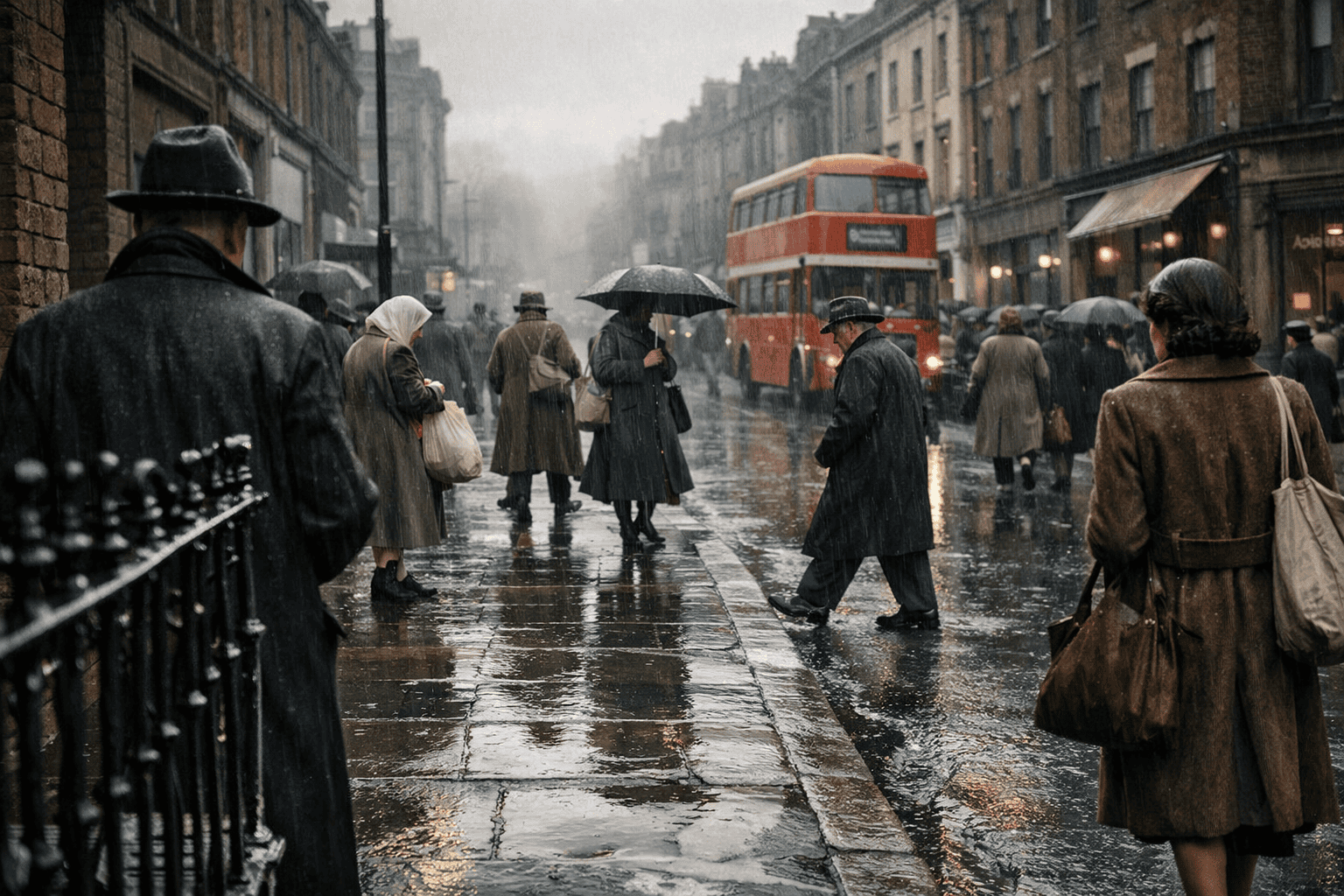
No umbrella keeps you completely dry.
Sin is not the storm that visits the faithless; it is the weather every soul lives under. Solomon knew it and almost silently centered a whole prayer on it. The theology of when, not if, is not pessimism dressed as piety. It is the realism that runs from the gate of Eden to the upper room, and it is the only soil in which genuine mercy can take root.
The Theology of When, Not If, You Break Covenant
“If they sin against you—for there is no one who does not sin—and you are angry with them and give them to an enemy, so that they are carried away captive to the land of the enemy, far off or near.”
—1 Kings 8:46, ESV
Solomon spoke those words on the brightest day Israel had yet known. The temple was finished. The kingdom was united. The ark had been carried into the Most Holy Place, and the glory of the LORD had descended in a cloud so thick the priests could not stand to minister (1 Kings 8:10–11). At the height of national worship, with the smoke of dedication still rising, the king knelt before the altar and prayed—not only about blessing, but about defeat. He prayed about covenant breach, foreign captivity, and a scattered people pleading toward a city they would no longer be permitted to enter. In the middle of triumph, Solomon rehearsed the language of exile.
The arresting thing is not that he imagined a future of failure. It is the small clause he folded into the petition almost in passing: for there is no one who does not sin. He did not pray, “If they should happen to fall.” He prayed as a man stating a fixed feature of the people he was praying for. Sin was not the exception he hoped to avoid. It was the condition he assumed. And the clause is not an aside; it is the theological hinge on which the whole prayer turns. Remove it, and the petition becomes a contingency plan. Leave it in, and the petition becomes a diagnosis.
What Solomon Knew That We Forget
We prefer a different theology. We prefer to treat sin as an interruption—an unfortunate departure from a baseline of faithfulness we expect to maintain. We build our discipleship, our self-understanding, and often our churches on the quiet assumption that obedience is the normal state and sin the aberration. Solomon’s prayer dismantles that assumption at the foundation. He does not present covenant failure as a risk to be managed but as a certainty to be planned for.
This is the question the passage presses on every reader, and on the Spirit-led believer most of all: do we believe what Solomon believed about ourselves? The Berean does not receive even a king’s prayer without examining it against the whole counsel of Scripture (Acts 17:11). And when we trace the clause back to its roots and forward to its fulfillment, we find that Solomon was not being morbid. He was being accurate. The theology of when, not if, is not pessimism dressed as piety. It is the realism that runs from the gate of Eden to the upper room, and it is the only soil in which genuine mercy can take root.
The Two Doors of Temptation
The pattern Solomon assumes was set in the opening chapters of Genesis. Two scenes establish how sin enters a human life, and they are not the same scene told twice.
In the garden, the temptation comes from outside. A voice not Eve’s own questions the word of God, reframes the prohibition, and offers a counterfeit promise (Genesis 3:1–5). The assault is external; the serpent speaks, and the woman listens. But one chapter later, the second scene relocates the threat entirely. God warns Cain before a single act is committed: “And if you do not do well, sin is crouching at the door. Its desire is contrary to you, but you must rule over it” (Genesis 4:7). Here there is no serpent. The danger crouches at Cain’s own threshold, and the verb is telling. Sin “crouching”—rovets (רֹבֵץ)—pictures an animal lying in wait, poised at the entrance rather than whispering from a tree. The threat is no longer merely something that comes to a person; it is something that resides with him, waiting for the door to open.
These two doors—the serpent’s voice and the crouching beast—frame the whole biblical account of human failure. We are assailed from without and undermined from within. Eve shows us temptation that arrives; Cain shows us temptation that waits. And the verdict Scripture draws from this double vulnerability is universal. “Surely there is not a righteous man on earth who does good and never sins” (Ecclesiastes 7:20). The Preacher does not hedge the claim or carve out exceptions for the devout. He shuts the door on the very possibility of a sinless life under the sun. What Solomon assumed in his prayer, the wisdom literature states as settled fact: the condition is not occasional, and it is not partial. It is the shared inheritance of every son of Adam.
A Prayer That Names the Inward Affliction
Before Solomon ever reaches the matter of exile, he has already located the trouble where it actually lives. Earlier in the same prayer he asks the LORD to hear “whatever prayer, whatever plea is made by any man or by all your people Israel, each knowing the affliction of his own heart and stretching out his hands toward this house” (1 Kings 8:38). The phrase deserves to be lingered over. The affliction Solomon expects every worshiper to recognize is not chiefly the famine or the siege he has just listed. It is the affliction of his own heart—the inward disorder each person carries beneath whatever outward calamity drives him to pray.
This is the realism the Spirit-led believer must take to heart. The deepest trouble is never merely the enemy at the gate; it is the corruption within the chest. The word Solomon uses for heart—levav (לֵבָב)—names not the pump in the body but the inner seat of a person’s thoughts, will, and affections, and the lexicons list this very verse among those where that center is the seat of trouble and affliction. Solomon assumes that genuine prayer begins where a person stops blaming his circumstances and reckons honestly with the affliction lodged at the core of himself. The temple was built for people who would need, again and again, to spread their hands toward it precisely because they knew the affliction within would surface again. Worship, in Solomon’s design, is not the activity of the sinless. It is the recourse of those who know they are not.
The Grammar of Return
When Solomon turns to the matter of exile, then, he does not speak as a prophet predicting a specific event. He speaks as a physician naming a diagnosis. The structure of the petition is a chain of assumed conditions: they will sin, they will be handed over, they will be carried away, and—if they turn—they will plead toward the land (1 Kings 8:46–48). The conditional grammar is not uncertainty about whether the disease exists. It is patience about when the symptoms will surface.
The hinge of the whole prayer arrives in the next verse, where the people, in a far country, “turn their heart” back toward God (1 Kings 8:47). The verb is shuv (שׁוּב), the great Old Testament word for returning—to turn back along a road already traveled, to reverse direction, to come home. The lexicons note that at this very verse the word carries the weight of repentance: to recall oneself to God, to retrace the path away from Him. Solomon is not merely anticipating that Israel will sin. He is teaching them, in advance, how to come back. He hands a scattered, future people the script of their own repentance before they have committed the offense that will require it.
This is why the prayer reads as diagnosis rather than mere prediction. A prophet might announce that exile is coming. Solomon does something stranger and more pastoral: he assumes the breach, and then spends his breath rehearsing the return—not pretending the failure away, but preparing the road home before it is needed. The grammar of his prayer mirrors the grammar of grace: not if you stumble, but when you do, here is the way back.
Praying Toward a City You Cannot Reach
There is a posture embedded in the prayer that deserves its own attention. Solomon describes the exiles praying “toward their land… the city that you have chosen” (1 Kings 8:48). This is not a military instruction. It is the bodily language of a people who have lost everything the land represented—the temple, the blessing, the nearness of God—and who can do nothing now but orient their hearts in the direction of a mercy they cannot manufacture.
It is the same posture the prophet in Babylon would later take, opening his windows toward Jerusalem to pray three times a day in open defiance of a king’s decree (Daniel 6:10). It is the posture of every sinner who has run far enough to feel the distance and turns, at last, to face the only direction in which help has ever come. To pray toward the city is to confess two things at once: that you cannot reach it by your own strength, and that the One who dwells there can still hear. The geography becomes theology. The exile prays toward home precisely because he cannot walk there—and that confession of helplessness is the very thing the prayer was designed to produce. A people convinced of their own sufficiency would never assume the posture. Only those who have accepted the certainty of their failure pray with their faces turned toward a mercy they cannot earn.
The Mercy Built Into the Judgment
Here the prayer turns from sober to astonishing. The conditions Solomon stacks up—if they sin, if they are carried away, if they turn—do not end in abandonment. They end in hearing: “then hear in heaven your dwelling place their prayer and their plea, and maintain their cause and forgive your people” (1 Kings 8:49–50). The judgment is real. The captivity is real. But the LORD has woven the door of return into the very fabric of the discipline.
This is the deep logic of covenant. The curses Israel would later endure were not the final word; they were instruments of restoration, the severe means by which a faithful God brings a faithless people home. Even the worst of the sentence Moses had pronounced over the nation carried within it the promise that, in the land of their enemies, the LORD would not utterly destroy them or break His covenant (Leviticus 26:44). The discipline has a destination. The exile has a road back. Solomon prays as a man who has grasped that the God of the covenant disciplines in order to recover, not to discard.
So the certainty of sin, far from being a counsel of despair, becomes the ground on which mercy stands. If failure were merely possible, mercy could remain theoretical—a contingency held in reserve. But because failure is certain, mercy must be structural. It cannot be an afterthought. It has to be built into the architecture from the beginning, and in Solomon’s prayer it is. The man who knows he will sin is the man who has already been taught where to run.
When the Battle Moves Inward
The new covenant does not soften this realism. It deepens it. The Lord Jesus, teaching His disciples to pray, does not offer a petition for the rare lapse. He builds confession into the daily rhythm: “forgive us our sins, for we ourselves forgive everyone who is indebted to us” (Luke 11:4). The request for forgiveness sits beside the request for daily bread—needed as regularly, assumed as constantly. The believer is not taught to pray as though sin were occasional. He is taught to pray as one who will have sins to confess tomorrow as surely as he will be hungry tomorrow.
The Apostle Paul presses the same realism into the life of the Spirit-filled Christian. “For the desires of the flesh are against the Spirit, and the desires of the Spirit are against the flesh, for these are opposed to each other, to keep you from doing the things you want to do” (Galatians 5:17). The conflict is not located out in the world but within the believer. The word for flesh here—sarx (σάρξ)—does not name the body as evil but names the whole self as it remains turned in on itself, the residue of the old order still resident in the redeemed. The battle Solomon traced from Eden to exile has not ended; it has moved to its final and most intimate front, the heart of the one who has been bought.
This is precisely why the Apostle John writes so bluntly to those who already believe. “If we say we have no sin, we deceive ourselves, and the truth is not in us… If we say we have not sinned, we make him a liar, and his word is not in us” (1 John 1:8, 10). The denial of indwelling sin is not a mark of advanced holiness; it is self-deception, and worse, it calls God a liar. The verdict stands over every believer without exception, exactly as Paul had already declared it: “for all have sinned and fall short of the glory of God” (Romans 3:23). The Spirit-led believer is not the one who has outgrown this truth but the one who has stopped arguing with it.
And yet John does not leave the believer in the diagnosis. The same sentence that forbids the denial of sin holds out the remedy: “If we confess our sins, he is faithful and just to forgive us our sins and to cleanse us from all unrighteousness” (1 John 1:9). The instruction is not to manufacture sinlessness but to confess—continually, honestly, expectantly. Expect the sin; deal with it. That is the rhythm of the Christian life, and it rests not on the believer’s performance but on the faithfulness and justice of God, who has bound Himself to forgive the confessing heart.
The new covenant’s promise is greater still, precisely because its realism is greater. The same prophets who foretold exile also foretold the remedy: “And I will give you a new heart, and a new spirit I will put within you. And I will remove the heart of stone from your flesh and give you a heart of flesh” (Ezekiel 36:26). The old covenant assumed the heart would wander and built a road back. The new covenant goes further and promises a new heart altogether—not merely a way home, but a transformation of the very organ that kept running away. The battle is relocated to the heart, but so is the cure. The covenant that assumes our weakness most fully is the covenant that secures us most completely, because its guarantee rests not on our resolve but on a Mediator who cannot fail.
The Realism That Saves
Return, then, to Solomon kneeling in the smoke of dedication, praying about defeat on the day of his greatest victory. We can hear it now for what it is. He was not staining a celebration with needless gloom. He was telling the truth about the people he loved and the God he served. He prayed about sin because there is no one who does not sin, and he had already named the affliction of the heart that every worshiper would one day have to bring, hands outstretched, to the house of the LORD.
We want a covenant that assumes our strength; Scripture gives us one that assumes our weakness. We want a discipleship in which sin is an interruption; Scripture gives us one in which repentance is continual. We want a faith we can keep by resolve; Scripture tells us that the moment we imagine our faithfulness rests on our resolve, we have already misunderstood the grace that holds us. To treat sin as the exception is not humility—it is the quiet pride that Solomon’s prayer was built to expose, the same pride John warns will make a liar of any believer who claims to have no sin.
The theology of when, not if, is not given to shame the believer. It is given to drive him to the only place where help has ever been found. The Spirit-led life is not the life that has escaped the certainty of sin but the life that has learned what to do with it: to expect it, to confess it, and to turn—again and again—toward the mercy that was promised to be faithful and just. If we did not need it, Solomon would not have prayed. And because it was sure, the LORD heard in heaven His dwelling place, and forgave (1 Kings 8:49–50). The certainty of our sin and the certainty of His mercy meet in a single prayer, prayed toward a city we could never reach on our own—and answered from the only One who could bring us there.
Editor’s Note: Fellow believer. Fellow Berean. Fellow Spirit-led Christian. Hear this plainly, because the article above has pressed it: you have sinned. You will sin again. This is not despair talking; it is Scripture. “All have sinned and fall short of the glory of God” (Romans 3:23). The Apostle Paul, writing as a redeemed man, confessed the war still in him: “I do not do what I want, but I do the very thing I hate” (Romans 7:15). If Paul names it, you need not pretend otherwise. To say you have no sin is not maturity; it is self-deception, and it makes God a liar (1 John 1:8, 10).
So what does the certainty of sin ask of you? Not resignation. Vigilance. When you fall—and you will—do not hide. Confess. “If we confess our sins, he is faithful and just to forgive us our sins and to cleanse us from all unrighteousness” (1 John 1:9). The promise does not rest on the strength of your repentance but on the faithfulness of the One who hears it.
And do not confess only to fall again unguarded. Embrace the disciplines that set you at a distance from temptation. Store up His word in your heart, “that I might not sin against you” (Psalm 119:11). Name your own sin nature honestly, and ask—of God, not of your own resolve—for the help to walk. The flesh will war against the Spirit as long as you live in this body (Galatians 5:17); you are not asked to win the war by gritted teeth but to walk by the Spirit who indwells you (Galatians 5:16).
Then walk. Not timidly, as one waiting to be condemned, but confidently, as one already secured. “There is therefore now no condemnation for those who are in Christ Jesus” (Romans 8:1). The rain falls on every one of us; do not pretend you stand outside it. Let the truth soak in—”If we say we have no sin, we deceive ourselves, and the truth is not in us” (1 John 1:8)—for only the one who stops sheltering under his own innocence ever lifts his face to mercy. The certainty of your sin is met by the greater certainty of His mercy. So confess what is true, lean on what is sure, and press on.